Peptide Testing
How To check here Review A Peptide Coa Genuine Vs Phony A 2016 survey published in Nature discovered that more than 70% of researchers had attempted and fallen short to recreate one more scientist's experiments. While peptide pureness isn't the only aspect, making use of poorly defined reagents is an acknowledged contributor to irreproducible outcomes. This is why reliable distributors give both HPLC and MS data on their Certifications of Analysis. As molecules leave the column, they travel through a detector-- normally a UV detector readied to 214 or 220 nm, wavelengths where the peptide bond takes in light highly. The detector documents just how much UV light is absorbed gradually, generating a chart called a chromatogram. Pureness is the portion of publications in the shipment that have every web page printed correctly, in the right order, without missing chapters and no extra pages stuffed in. A strong examination record can support purity, identity, and batch traceability. It does not transform a research study substance into a professional item, and it does not replace experimental validation in the researcher's own system. The peptide example is liquified in a compatible solvent and packed right into an autosampler. The injector presents a precise quantity of example into the mobile-phase stream.
Recognizing Peptide Purity: What 99%+ Truly Indicates
The pureness of peptides is determined using logical approaches such as reversed-phase high efficiency liquid chromatography (RP-HPLC) and mass spectrometry (MS). Amino acid evaluation can likewise be used to determine yield or real quantity of peptide. Peptide purity testing is one of one of the most essential components of research peptide quality control.Is 95% pureness great for peptides?
Peptides with an 85% purity degree or better are typically used in enzyme assays or biological activity researches. Peptides with Exercise Physiology purity greater than 95% are outstanding for quantitative evaluation.
Discover Material Categories
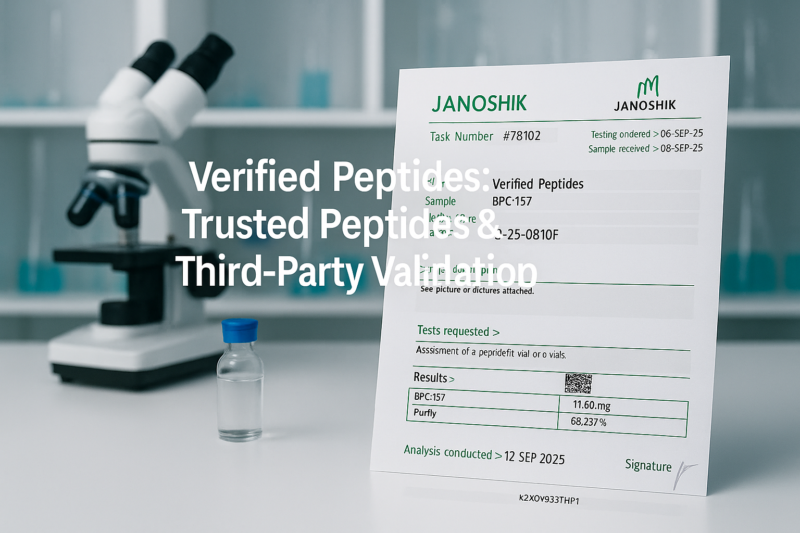
However these COAs often originate from the vendor's own screening, creating an apparent problem of rate of interest. Also when suppliers declare third-party screening, verifying those cases requires initiative most buyers do not make. Researchers usually assess mass spectrometry results along with HPLC data to develop an extra total understanding of product top quality. As the study peptide market continues to grow, understanding how peptide purity testing works can help scientists make even more informed sourcing choices and much better examine provider openness. Impurities aren't just inactive fillers; they can actively hinder your job. Peptide pureness testing describes analytical treatments made use of to review the make-up and high quality of a peptide example. To make certain full neutrality, we select random samples directly from the completed manufacturing batch for independent lab testing. The exact same item clients obtain is the product submitted for evaluation. Using high-performance fluid chromatography (HPLC), we verify that the energetic ingredient content is at the very least 99% pure. This removes fillers and impurities, guaranteeing the purity of every dosage. Trace amounts of solvents made use of during synthesis and purification-- acetonitrile, dimethylformamide (DMF), dichloromethane-- can continue to be in the final product.- Researchers often reference Janoshik screening when evaluating new suppliers or validating claims.
- The key point is not to confuse purity (HPLC portion of the primary peptide vs impurities) with total material.
- The purity number requires technique context and sustaining result, such as HPLC chromatograms and identity confirmation by MS, connected to a batch-specific COA.
- This is why much longer peptides are harder to generate at high purity and normally set you back more.